1. Information We Collect
We do not sell your personal data. We collect local storage theme preferences stored securely in your browser.
A deep dive into ingredients, protein macros, flavors, and value to help you make the best choice for your next bowl. Whether you're craving Mediterranean freshness or Mexican-American depth, we've broken down the real nutrition facts so you can order with confidence.
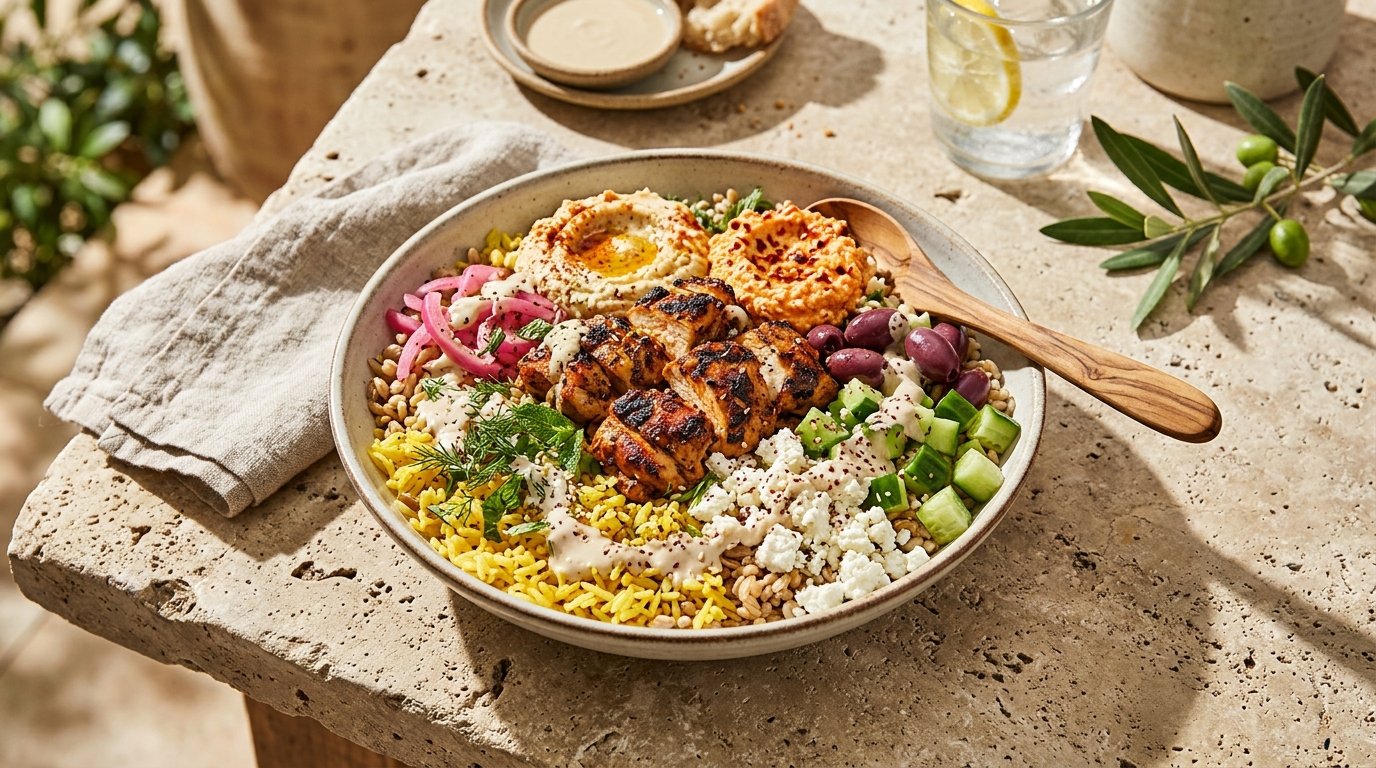
CAVA vs Chipotle comes down to one core difference: CAVA builds Mediterranean-style bowls, while Chipotle builds Mexican-American ones — both using the same pick-a-base, pick-a-protein, pick-your-toppings format. CAVA leans on grains and greens, olive-oil-based dressings, and dips like hummus and tzatziki. Chipotle leans on rice and beans, adobo-marinated meats, and dairy-based toppings like cheese and sour cream.
Neither chain is automatically the lighter, cheaper, or more filling choice. Published nutrition data shows both can range from under 500 calories to over 900, depending entirely on what you order. So instead of a blanket "CAVA is healthier" or "Chipotle is better value" verdict, this guide compares specific, matched builds side by side — showing exactly where the real differences come from, so you can order with the actual numbers in hand.
| Feature | 🥗 CAVA | 🌯 Chipotle |
|---|---|---|
| Cuisine Identity | Mediterranean-inspired (bowls, pitas, salads) | Mexican-inspired (burritos, bowls, tacos, salads) |
| Flavor Profile | Bright, herbaceous, acidic (lemon, garlic, yogurt, feta) | Smoky, savory, spice-forward (adobo, cilantro, lime) |
| Published Bowl Calorie Range | Roughly 400–900 cal for standard curated builds | Roughly 420–910 cal for a standard bowl, higher with chips or extra add-ons |
| Protein Options | Chicken, steak, lamb, falafel, harissa chicken, avocado, veggie | Chicken, steak, barbacoa, carnitas, sofritas, veggie |
| Base Options | Multiple greens and grains, plus half-and-half combos | White rice, brown rice, lettuce blend, or no base |
| Price Range | Roughly $11–$15 for a custom bowl | Roughly $9–$14 for a custom bowl (before add-ons) |
Prices, portion sizes, and published nutrition figures vary by location and change over time — confirm current numbers on each brand's official nutrition page or in-app calculator before relying on them for a specific order.
CAVA is built around a build-your-own line of bowls, pitas, and salads rooted in Mediterranean flavors. Instead of rice and beans, the base layer is a mix of grains and greens — options include SuperGreens, brown rice, saffron basmati rice, or a half-and-half combination. Proteins include grilled chicken, grilled steak, braised lamb, falafel, and harissa honey chicken, and much of the flavor comes from spreads like hummus, tzatziki, and Crazy Feta rather than melted cheese. Toppings lean toward raw, acidic vegetables — pickled onions, Persian cucumbers, tomato and onion. Explore options on our CAVA Bowl Menu Guide.
Chipotle is built around classic Mexican-American formats: burritos, burrito bowls, tacos, quesadillas, and salads. The menu centers on marinated proteins — chicken, steak, barbacoa, and carnitas — layered over white or brown rice and black or pinto beans. Toppings include shredded cheese, sour cream, guacamole, and salsas ranging from mild tomato to spicier tomatillo-based options. Unlike CAVA, Chipotle relies on distinct layers of rich ingredients to build its flavor profile. Warm rice and beans serve as a hearty foundation, topped with fresh-mashed guacamole and roasted salsa to create a deeply satisfying meal.
A CAVA bowl typically layers a grain-and-greens base, a protein, and two or three toppings, finished with a spread and a dressing. Because dressings and dips like tahini or hummus are mixed through rather than pooled on top, the bowl tends to stay evenly coated rather than separating into distinct layers.
A Chipotle bowl is built as a burrito without the tortilla: rice and beans on the bottom, protein and salsa on top, finished with cheese, lettuce, and optional sour cream or guacamole. The ingredients sit in distinct layers rather than being pre-mixed, which is why many people stir the bowl before eating.
The two chains structure a bowl differently rather than one being objectively "better built." CAVA's dips and dressings double as binders that hold lighter ingredients together. Chipotle's bowls use rice as the structural base, which adds more volume but can turn soft at the bottom if salsa sits on it for a while before eating.
Sodium is worth watching at both chains regardless of which one you choose. A single scoop of CAVA's grilled chicken carries about 670mg of sodium on its own, and dips like hummus or tzatziki add more on top. Chipotle's proteins and toppings can push a fully-loaded bowl past 1,400mg of sodium once cheese, salsa, and sour cream are combined. If sodium is a concern, the fix at either restaurant is the same: fewer sauces and dips, not switching chains. Calculate precise numbers on our CAVA Nutrition Calculator.
Instead of comparing arbitrary calorie ranges, here's how two comparable order types stack up using each brand's published per-ingredient nutrition data. These are example builds, not universal defaults.
| Nutrient | CAVA (SuperGreens, Chicken, Hummus, Tzatziki, Tomato, Tahini) | Chipotle (Double Chicken, Black Beans, Tomato Salsa) |
|---|---|---|
| Calories | ~475 | ~515 |
| Protein | ~35g | ~72g |
| Fat | ~20g | N/A |
| Sodium | ~1,150mg | ~1,280mg |
| Nutrient | CAVA (Chicken, SuperGreens, Tzatziki, Tomato, Feta, Tahini) | Chipotle (Chicken, White Rice, Black Beans, Salsa, Cheese) |
|---|---|---|
| Calories | ~650 | ~680–765 |
| Protein | ~30-35g | ~47–52g |
The pattern that holds across both examples: Chipotle's chicken-based builds tend to deliver more total protein for a comparable or lower calorie count, mainly because a Chipotle protein scoop is a larger single serving than CAVA's. CAVA's builds tend to bring more vegetable volume and a wider mix of dips and bases at a similar calorie level.
At the ingredient level, Chipotle's grilled chicken (about 180 calories for 32g of protein) has a better protein-to-calorie ratio than CAVA's grilled chicken (about 250 calories for 28g of protein), largely because CAVA's chicken is prepared with more added fat from its marinade. On the plant-based side, CAVA's black lentils are a genuinely protein-dense option, while falafel is higher in calories with comparatively less protein per serving, making the lentils a superior choice for hitting your macros.
Individual ingredients at each restaurant carry different fat profiles. CAVA's tahini-based dressings and dips are primarily fat from sesame and olive oil, which is largely unsaturated. Chipotle's sour cream and shredded cheese are dairy-based and higher in saturated fat. A Chipotle bowl built without sour cream or cheese, and a CAVA bowl loaded with Crazy Feta and a heavier dressing, can land in a very different place than the stereotype of either chain suggests.
CAVA's flavor profile is built on brightness: lemon, garlic, fresh herbs, and vinegar-forward dressings that cut through richer ingredients like feta and tahini. Pickled vegetables and fresh herbs add acidity to most bites. Check out our CAVA Sauces & Dressings Guide.
Chipotle's flavor profile is built on depth: adobo marinades, charred peppers, cumin, and lime, layered with rich, savory toppings like melted cheese and sour cream.
If you gravitate toward fresh, herb-driven, tangy food, CAVA is likely to appeal more. If you prefer warm, smoky, richer flavors, Chipotle is the better fit. This is a genuine cuisine preference rather than a quality difference between the two menus.
CAVA's published price range for a standard custom bowl runs slightly higher than Chipotle's, reflecting ingredients like lamb, feta, and specialty dips. Chipotle's base menu prices are typically a little lower, though add-ons like guacamole and queso are priced separately and can close much of that gap.
A Chipotle protein scoop is a larger default serving than CAVA's, so a comparable base order tends to be heavier at Chipotle for a similar price. CAVA's pricing includes a wider range of dips and toppings by default, so a CAVA order with several spreads may deliver more variety for the price. See our CAVA Sides Menu Guide.
CAVA offers a wider variety of bases (multiple grains and greens, plus half-and-half combinations) and a broader set of house-made dressings and dips, from Lemon-Herb Tahini to Greek Vinaigrette. Chipotle's customization centers more on classic Mexican toppings — corn salsa, tomatillo salsas — with a simpler choice between white rice, brown rice, or a lettuce blend as the base.
Chipotle offers more distinct serving formats — burritos, bowls, tacos, quesadillas, and salads. CAVA sticks to bowls, pitas, and salads, with more variation happening within each format rather than across formats. Compare with our CAVA Pita Menu Guide.
CAVA offers falafel and a range of plant-based spreads, including hummus and harissa, that are naturally vegetarian, with dairy-free options available. Learn more on our CAVA Vegan Menu Guide. Chipotle's standout vegan option is sofritas, organic braised tofu seasoned with poblano peppers, which can be paired with rice, beans, and salsa for a fully plant-based bowl.
Both chains publish gluten-free ordering guidance, and both note real limits on that guidance due to shared prep areas. Skipping CAVA's pita or Chipotle's flour tortilla removes the obvious wheat ingredient from your order, but it does not make the meal verified safe from cross-contact.
CAVA high-protein build: double grilled chicken or steak over a greens base, with harissa and a light amount of tzatziki, skipping heavier grains to reduce total calories relative to protein.
Chipotle high-protein build: double chicken over black beans and tomato salsa — a published example combination that reaches roughly 72g of protein at around 515 calories, skipping rice, cheese, and sour cream to keep the calorie total down.
Both chains publish detailed allergen guides covering common allergens like dairy, soy, and tree nuts. Both explicitly state they cannot guarantee any item is fully free of allergens because ingredients are prepared and served in shared, open-container lines. If you have a food allergy — not just a preference — treat the printed or app-based allergen guide as a starting point, and confirm directly with in-store staff before ordering.
Diners who want Mediterranean flavors, a wide range of fresh vegetable toppings and house-made dips, and more flexibility to build a lower-calorie bowl using grains-and-greens combinations. Find locations on our CAVA Store Finder Directory.
Diners who want a heartier, higher-volume meal at a slightly lower base price, prefer classic Mexican-American flavors, or want format variety like burritos and quesadillas.
There's no single winner between CAVA and Chipotle — the better choice depends on what you're building, not which restaurant you walk into. If you want a lighter, vegetable-forward meal with Mediterranean flavor, CAVA's menu makes that easier by default. If you want a higher-protein, higher-volume meal with classic Tex-Mex flavor, Chipotle's base makes that easier. The restaurant matters less than the specific bowl you build.
It depends on the build, not the restaurant. CAVA's grain-and-greens bases and lighter dips make it easier to land in a lower-calorie range by default, and ingredients like tahini and olive oil are largely unsaturated fat. But a Chipotle bowl built with lean protein, beans, and salsa — skipping cheese and sour cream — can match or beat a heavily-dressed CAVA bowl on calories and saturated fat.
Generally, no. Chipotle's base menu prices tend to run slightly lower than CAVA's, though Chipotle add-ons like guacamole and queso are priced separately and can close or exceed that gap depending on your order.
Not by default. Chipotle's grilled chicken (32g protein at about 180 calories) has a better protein-to-calorie ratio than CAVA's grilled chicken (28g protein at about 250 calories), and Chipotle's published double-chicken build reaches roughly 72g of protein in a single order. CAVA can match this with double protein portions, but Chipotle's standard single-scoop protein is the more protein-dense option ingredient-for-ingredient.
This comes down to flavor preference rather than quality. CAVA's bowls are brighter and more herb-forward; Chipotle's are heartier and more savory. Neither is objectively better — they're built around different cuisines.
CAVA offers more variety within its bowls, pitas, and salads — more bases, dressings, and dips. Chipotle offers more variety in serving format, with burritos, tacos, and quesadillas in addition to bowls and salads.
Neither restaurant is inherently healthier — published nutrition data shows both can range from a lean, sub-500-calorie meal to a 1,000-plus-calorie meal depending entirely on what you add. Skipping heavy cheese, sour cream, and oil-based dressings, and prioritizing vegetables and lean protein, is what actually determines the outcome at either restaurant.